

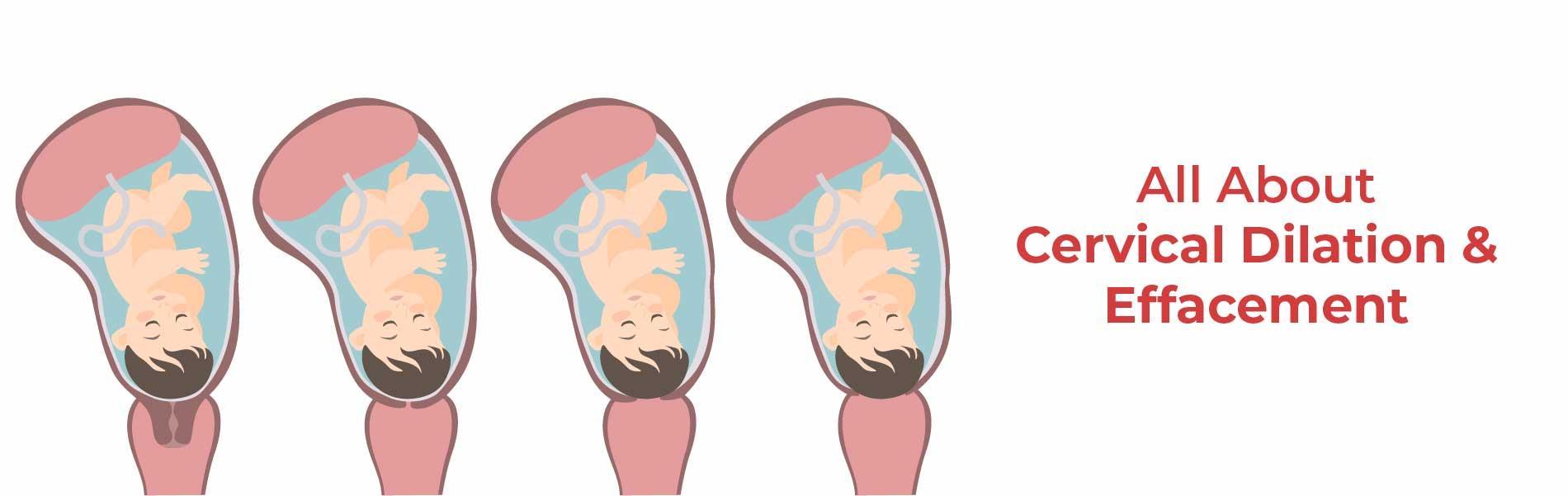
What is Cervix Dilation? A Guide For First-Time Moms
If you are an expectant mom who’s preparing for “THE” day, you might have heard your gynaecologist use the term “cervical dilation” quite often. If you have tried running a hundred Google searches to know more about them, you aren’t alone. Cervical dilation and effacement are crucial signs to show that your body is preparing to bring your baby into the world.
In this blog, we will discuss cervical dilation in simple terms. We will also decode cervical effacement. Read along as we explore how cervical effacement starts, the different stages, and symptoms to prepare you for your delivery.
Key Takeaways
- Cervical dilation and effacement are natural processes that prepare your body for childbirth.
- Dilation is measured from 1 to 10 cm, 10 cm being complete dilation, ready for delivery.
- Cervical effacement accompanies dilation to make the cervix wider and softer for the baby.
- Pain and discomfort can be felt during cervical dilation but every woman has a different experience.
- Your gynaecologist will conduct regular checkups to monitor cervix dilation.1
- Understanding all about cervical dilation can prepare expecting mothers.
- Always consult your doctor to know more about early cervical dilation, or pain.
What is Dilation?
Dilation in pregnancy is the slow opening of the cervix to make way for childbirth. This process begins during the first stage of labor, when the cervix starts opening and thins out. During this stage, the baby begins to move into the cervical opening, also known as the birth canal.
The cervix remains closed throughout the pregnancy while protecting the growing baby. As you get closer to labor, the cervix gradually opens from 1- 2 cm to 10 cm. This helps the woman have a successful vaginal delivery. The entire process can take anywhere from hours to days or weeks. However, once you reach the stage of active labor, the cervix dilates to 6- 10 cm in a matter of hours to make way for the baby. 2
What is Effacement?
While dilation is the gradual opening of the cervix for childbirth, effacement can be defined by the thinning and shortening of the cervix to make way for the newborn.3 Your cervix is 3.5 to 4 cm long during pregnancy. As your body begins to get ready for childbirth, your cervix thins out as thin as a paper sheet.
Medical professionals usually measure effacement in percentage. If and when your cervix is completely thin, you are 100% effaced. Once you are 100% effaced along with 10 cm dilated, you are about to give birth to your little one.4
Is Cervical Dilation and Effacement the Same?
Cervical dilation and effacement are not the same processes, but they go hand in hand to successfully bring a baby into the world. Just like cervical dilation, effacement is also accompanied by contractions that again help the mother push the baby.
Both cervical dilation and effacement occur simultaneously during the first stage of labor, along with the contractions that give a little push on the cervix. 5
When Do You Start Dilating?
Every pregnancy is different, and every woman dilates differently. That said, cervix dilation can start as early as a week or two before labor or later during labor. As it is a sign that your body is preparing for childbirth, some women have seen slight changes as early as 36 weeks. For other women, dilation often starts during early labour, taking them from 0 to 6 cm over hours or days. Later, from 6 to 10 cm during active labour 6
Generally, the timeline of dilation can be described as follows:
Weeks before labour:
Your body starts dilating and effacing weeks before your due date, mostly without any visible signs. Most gynaecologists start checking for dilation as early as 36 weeks.7
During labour:
Your body starts showing visible signs of dilating and effacing as you go into early and active labour in stages. During this phase, the cervix gradually dilates from 0 to about 6 cm with regular contractions and progresses to full dilation at 10 cm. 7
How Long Does Cervical Dilation Last?
Ideally, cervical dilation lasts till it reaches 10 cm. The time that may be taken to reach 10 cm may vary from one woman to another. While some women may reach complete dilation within hours, others may take days to dilate to 10 cm.8 It is very common for medical professionals to record an effortless cervical dilation around 37 weeks and not notice even the slightest of dilation till the 40th week. This is not a sign of worry.
The process of cervical dilation and effacement will eventually progress whenever a woman gets into labour.
Phases of Dilation

Here are the phases of dilation as you enter labour.
Early/ Latent Phase:
Beginning with mild and irregular contractions, your cervix begins dilating from 1 to 3 cm. At this stage, your cervix also starts to thin out (cervical effacement).
Active Phase:
At this stage, the contractions begin to become more frequent and stronger, with your cervix rapidly dilating from 6 to 10 cm.
Transition Phase:
Some women experience a slow shift before full dilation, which is then followed by pushing out the baby and delivering the placenta.
Symptoms of Dilation
According to medical practitioners, symptoms of cervix dilation include the following:
- Cramps: Women have experienced cramps similar to menstrual pain, sometimes accompanied by sharp, sudden sensations often referred to as “lightning crotch.”
- Mucus discharge with blood: As the cervix opens, a clear discharge with traces of pink or brown, along with the mucus plug, can be seen.
- Contractions: Mild to strong uterine contractions can also be felt as the cervix widens to make way for the baby.
- Pressure in the pelvis: As the baby moves down towards the pelvis, pressure can be felt in the pelvic area.
- Lower back pain: Most women also experience a sharp, shooting pain in the lower back.
Factors Affecting Cervical Dilation
The extent and rate at which the cervix dilates can depend on a lot of factors. Some of which include the following:
- Medical history of the Mother: A woman who’s given birth before will dilate faster compared to a woman who’s a first-time mother. 10
- Pelvis Anatomy: The size and shape of the pelvis impact cervical dilation. A smaller pelvis with a bigger baby may delay cervical dilation. 11
- Size of the baby: A larger fetus or a baby with a larger head circumference can slow down cervical dilation.12
- Fetal Position: If the baby is stuck in a breech position, cervical dilation can take longer than expected. However, if the baby’s head is fixed into position, cervical dilation can help deliver the baby quickly. 13
Does Cervical Dilation Indicate Labour?
Cervical dilation and effacement are the main signs that indicate a progressing labour. As the cervix widens to 10 cm and thins out to allow the baby to move through, significant dilation denotes active labour.
However, in some cases, an early cervical dilation can be a warning sign. If it started earlier, it can be a sign of premature delivery. In such cases, medical professionals prescribe supplements like progesterone to support the cervix and keep it closed.
No Cervical Dilation During Labour
Also referred to as cervical arrest, the absence of cervical dilation during labor requires prompt medical evaluation and management.14 In some cases, this may lead to a cesarean (C-section) delivery.
Most common causes that contribute to zero cervical dilation and effacement include:
- Baby in a breech position
- Weak uterine contractions
- Cephalopelvic Disproportion (baby too large for the mother’s pelvis)
In such cases, medical interventions are needed to bring the baby into the world safely. Doctors usually medicate to strengthen contractions or help dilate and open the cervix. If all fails, a Cesarean section becomes their go-to.
Final Thoughts
Questions like, “What is cervix dilation?” “Is it painful?” “How long does cervical effacement take?” is quite common as your due date approaches. Know that it is a natural and important part of the labour. It is like a signal that your body is ready for childbirth. While the duration and pain can differ from woman to woman, understanding what it means and how to deal with it can help you fight the fear. Overall, trust your body, diligently follow your doctor’s advice, and focus on staying calm as you prepare to meet your little one.
FAQs
Q1) Is cervical dilation painful?
All women experience dilation differently. Some women experience sharp, shooting pain when it begins, while others don’t even realise until the mucus plug comes out.
Q2) How long does it take to dilate from 1 to 10 cm?
The time duration to dilate from 1 to 10 cm differs for everyone based on many factors, like the mother’s health, the size of the baby, and the intensity of the contractions.
Q3) How many cm dilated is a normal cervix?
A normal cervix of a non-pregnant woman is 0 cm dilated.15 The cervix remains closed to hold the baby safely in the womb and gradually starts widening as the labour approaches.
Q4) How do you know if your cervix is dilating?
Physical signs like a mucus plug in the discharge, increased contractions with pelvic pressure, and vaginal discharge indicate a dilating cervix.
Q5) How many fingers is 2 cm dilated?
A cervix that is 2 cm dilated may roughly correspond to the width of one to two fingers during a clinical examination. This indicates the early stage of labour.
Q6) Why is cervical dilation painful?
The process of dilation is accompanied by strong contractions in the uterus, along with the baby’s head putting pressure on the pelvis to make its way out, which makes it a painful process.
Q7) Can my water break at 2 cm dilated?
Yes. Your water can break at 2 cm cervical dilation,16 as it’s a sign of approaching labour.
Q8) How fast can you go from 5 to 10 cm?
Typically, it can take anywhere between 4 and 8 hours or longer. However, it can also take 2 to 4 hours for mothers who have given birth before.
References
+
Related Products
Are You Family Expecting A Baby?
I authorise LifeCell International Pvt.Ltd & its representatives to contact me with updates and notifications via Email/SMS/WhatsApp/Call. This will override DND/NDNC.
