

Non-Invasive Cancer Screening: What Patients Need to Know About Liquid Biopsy
When it comes to cancer, we all know that early detection can make a huge difference. But let’s be honest, traditional screening methods can be a bit daunting. They often involve invasive procedures that can be uncomfortable, stressful, and sometimes even risky. But here’s a silver lining. There’s now a way to get the same critical insights without the discomfort of liquid biopsy! It’s a simple blood test that can detect tiny fragments of tumor DNA circulating in your bloodstream.
Liquid biopsy allows for early detection, helps doctors tailor treatments, and monitor therapy outcomes over time. All of this can lead to better outcomes and less stress for patients.1
In this blog, we’ll break down exactly what liquid biopsy is, how it works, its many benefits, and why it’s quickly becoming a key part of modern cancer care.
Key Takeaways
|
What is a Liquid Biopsy?
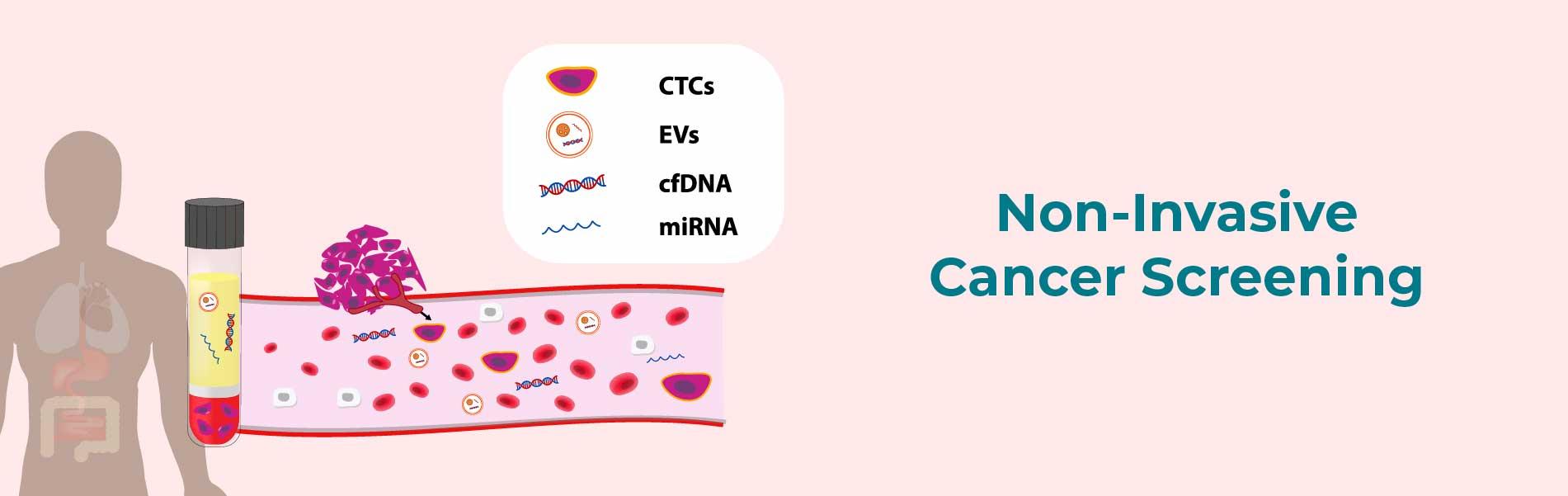
A liquid biopsy is a special blood test that helps detect cancer without the need for surgery. As cancer grows, tiny pieces of the tumour break away and enter the bloodstream. These fragments can be picked up through a liquid biopsy, giving doctors valuable insights into what’s happening inside the body.
The test looks for:
- Circulating Tumour Cells (CTCs): Whole cancer cells that have detached from the tumour and are travelling through the blood.
- Circulating Tumor DNA (ctDNA): Small fragments of DNA from tumor cells. DNA carries the instructions that control how a cell behaves, so analyzing ctDNA can reveal important details about the cancer.
Both CTCs and ctDNA act like a “fingerprint” of the tumor. They don’t just show that cancer may be present; they also provide genetic information about the tumor. This helps doctors choose the most effective, personalized treatment for each patient.
Although liquid biopsy is still a relatively new technology, it’s already showing promise. The U.S. Food and Drug Administration (FDA) has approved certain liquid biopsy applications, and ongoing research continues to expand its potential in early detection, treatment planning, and monitoring recurrence.
How Does Liquid Biopsy Work?
A liquid biopsy is a quick and simple test that only requires a routine blood draw similar to other blood tests you may have had before. Your healthcare provider will take a small sample of your blood and send it to the laboratory for analysis.
In the lab, the blood is carefully processed:
- First, the blood cells (the solid part) are separated from the plasma (the liquid part).
- The plasma is then examined for traces of cancer, specifically circulating tumour cells (CTCs) or circulating tumour DNA (ctDNA).
A pathologist, a doctor specially trained to study blood and tissue samples, looks closely at the plasma to detect these markers. If present, they can reveal valuable information about whether a tumour exists and what its genetic characteristics might be.
Advantages of Liquid Biopsy
- Non-invasive and requires only a simple blood draw
- Less expensive compared to traditional tissue biopsies
- Detects tumour material from multiple sites, giving a broader view of cancer
- Can be repeated easily to monitor treatment response and disease progression
- Potential for early cancer detection and minimal residual disease monitoring
- Helps guide personalised treatment plans based on tumour mutations 2
Limitations of Liquid Biopsy
- Low levels of tumour DNA/cells may be present, especially in early-stage cancers
- Isolating circulating tumour cells (CTCs) is technically challenging
- Lack of standardisation across labs can reduce accuracy and reproducibility
- Some DNA mutations may come from normal ageing processes (false positives)
- Tumour shedding is uneven, so results may not fully reflect tumour diversity
- Treatments can suppress ctDNA shedding, lowering test sensitivity.
When Is a Liquid Biopsy Performed?
A liquid biopsy is usually recommended when a patient has metastatic or advanced cancer meaning the cancer has spread from its original site to other parts of the body. In these cases, standard treatments may not be effective, and doctors need more detailed information about the cancer to guide next steps.
Doctors may order a liquid biopsy to:
- Evaluate prognosis: The number of tumor cells circulating in the blood can indicate how aggressive the cancer is. Fewer cells usually suggest a better outcome.
- Monitor treatment response: By repeating the test periodically, healthcare providers can see how well a therapy is working and make timely adjustments.
- Guide personalized therapy: Liquid biopsies can reveal genetic changes in the tumor that help doctors select targeted treatments.
OncoLife Liquid Biopsy Panels at LifeCell Diagnostics:
At LifeCell Diagnostics, we bring advanced precision oncology testing through OncoLife Liquid Biopsy panels, designed to detect tumour DNA fragments in the blood with high sensitivity. These panels help oncologists gain actionable insights for diagnosis, prognosis, and treatment planning without the need for invasive biopsies.
Our offerings include:
ONCO0078 – OncoLife Targeted Liquid Biopsy (1212 Gene Panel)
ONCO0054 – OncoLife Cell-Free Lung Cancer Panel (12 Genes)
ONCO0154 – OncoLife Hotspot 50 Gene Panel Assay
ONCO0039 – OncoLife 52 Gene Panel
Final Thoughts
Liquid biopsy is reshaping the future of cancer care. A simple blood draw can now achieve what was once only possible through invasive and sometimes risky procedures. While it is not a complete replacement for traditional biopsies, liquid biopsy offers a safer, faster, and more comfortable option for patients, especially when ongoing monitoring or personalized treatment planning is needed.
With advancements like OncoLife Liquid Biopsy panels from LifeCell Diagnostics, patients and doctors now have access to comprehensive insights that can guide smarter, more targeted treatment decisions. As research continues and technology evolves, liquid biopsy is set to become an even more powerful ally in early detection, treatment monitoring, and improving long-term outcomes.
FAQs
1. What is non-invasive cancer screening?
Non-invasive cancer screening refers to tests that detect signs of cancer without surgery or tissue removal. Liquid biopsy is one of the most advanced non-invasive cancer screening methods, using a simple blood test to identify tumour DNA or cells in the bloodstream.
2. How does a liquid biopsy work in non-invasive cancer screening?
In a liquid biopsy, a small blood sample is collected and analysed in a lab. Specialists look for circulating tumour cells (CTCs) or circulating tumour DNA (ctDNA), which provide insights into the presence of cancer and its genetic profile.
3. What are the benefits of non-invasive cancer screening through liquid biopsy?
The main benefits include:
No necessity of surgery
Safer and more comfortable for patients
Quick results with minimal recovery time
Ability to monitor treatment response and disease progression
Potential for early cancer detection
References
+
Related Posts

Related Products
Are You Family Expecting A Baby?
I authorise LifeCell International Pvt.Ltd & its representatives to contact me with updates and notifications via Email/SMS/WhatsApp/Call. This will override DND/NDNC.
