

10 Early Symptoms of Malaria You Should Not Ignore
About 95% of the Indian population resides in major mosquito-endemic areas. The country faces a major burden of mosquito-borne diseases like malaria due to its tropical climate, rapid unplanned urban growth and year-round insect breeding. 1
What makes malaria especially dangerous is the fact that it progresses just like an ordinary cold, cough or flu infection. It looks quite ordinary in its earliest phase with symptoms like headache, fever, myalgias, nausea, vomiting and diarrhoea, often leading physicians to give a wrong diagnosis.2 This leads to delayed treatments, rapid disease progression and health deterioration.
This blog breaks down 10 early symptoms of malaria that you must never dismiss. Adequate knowledge of these will help you seek medical guidance early on.
What Causes Malaria?
Malaria is caused by the Plasmodium parasite infection, which is transferred to humans through the bite of the female Anopheles mosquito carrying this parasite. After the infected bite, there is an incubation period of 7 to 30 days, post which the first symptoms of the disease may appear. Shorter incubation periods are mostly observed with P. falciparum, and longer ones are seen with P. malariae. People generally feel perfectly fine during this window while the parasite silently multiplies in their liver and bloodstream. 3
10 Early Symptoms of Malaria
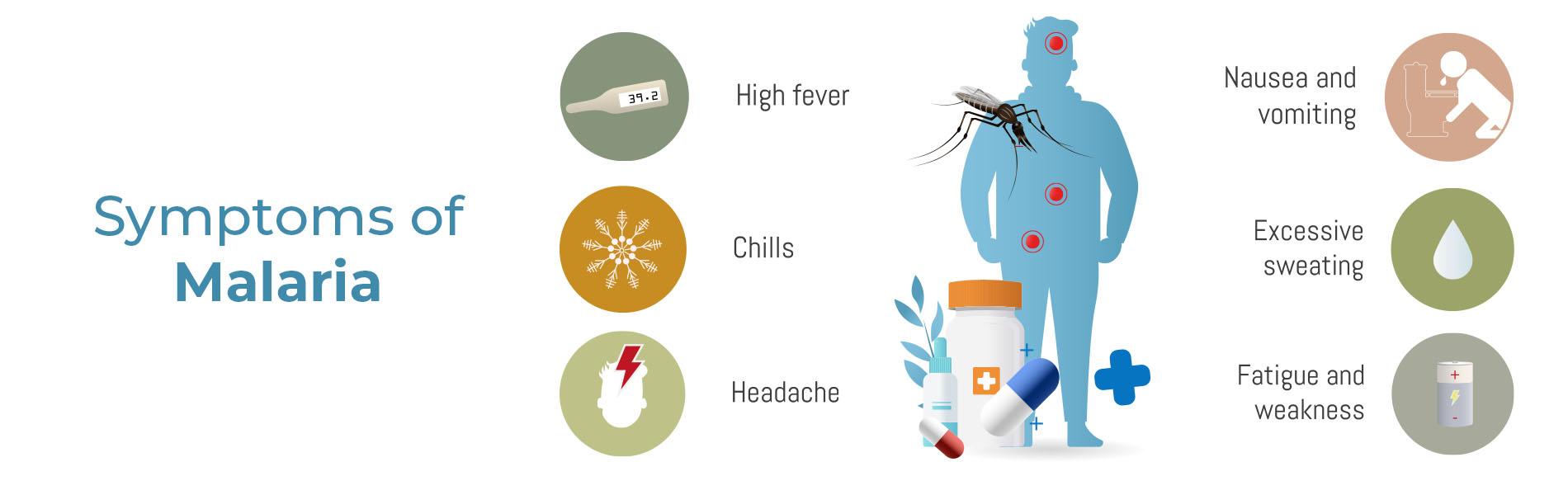
Mentioned below are the 10 early symptoms of malaria you should watch out for. Two or more of these symptoms at the same time should prompt immediate malaria testing for clarity:
1. Sudden High Fever
The very first warning sign from the body is a fever. Around 92% patients experience fever, and 79% complain of chills initially. 4 These symptoms do not remain constant in the beginning. In some infections, fever recurs every 48 hours - known as tertian malaria, while in some other cases, fever occurs every 72 hours, known as quartan malaria. 5 You should never assume a high fever to be a viral bug and leave it untreated.
2. Shaking Chills and Rigours
Shaking chills and rigours are among the most distinctive warning signs of malaria. These usually accompany fever. A classic malaria paroxysm has three stages: a 15-60 minute cold stage of shivering and chills, a 2-6 hour hot stage in which the fever sometimes reaches 41°C, along with headaches, and finally a 2-to 4-hour sweating stage in which the fever drops rapidly. 5 If you notice this three-stage pattern, seek medical care without delay.
3. Profuse Sweating
The sweating stage at the end of each fever stage is an important clue clinically. Diaphoresis - excessive sweating - is seen in 64% of malaria patients, and is a consistent symptom in all malaria species. 4 Most patients sweat profusely at the end of a fever episode and generally feel better for a temporary period later. This false recovery often encourages them to delay testing - a dangerous mistake.
4. Severe Headache
Headaches in malaria are often experienced along with fever and chills, the most frequent symptoms. While both meningitis and malaria are characterised by severe headaches, the former infection features neck stiffness and photophobia, while malaria headaches do not. This is a key distinguishing factor when evaluating the symptoms clinically. 6
5. Muscle Pain and Body Aches (Myalgia)
Most people misread muscle pain as flu symptoms. Malaria is characterised by fever and influenza-like symptoms such as headache, chills, etc., which can occur intermittently. 7 But up to two days before the onset of fever, symptoms like backache, dizziness, malaise, etc., may be experienced. These early aches, which occur even before the fever, are a commonly overlooked signal of malaria.
6. Nausea, Vomiting, and Diarrhoea
Gastrointestinal symptoms are common in malaria and are a major reason the disease gets misdiagnosed as food poisoning or gastroenteritis. Nausea, vomiting, and watery diarrhoea are frequent in malaria and should be evaluated carefully.
7. Fatigue and General Malaise
An overwhelming sense of tiredness, beyond normal fatigue, is a classic early feature of malaria. With timely medical intervention, most people experience a rapid resolution of symptoms. However, without prompt treatment, the disease progresses along with serious complications such as cerebral malaria, anaemia, coma or even death. 8
8. Pale Skin, Yellowing (Jaundice), and Anaemia Signs
A slightly yellowish skin tinge is an early sign of red blood cells being destroyed. Additional laboratory findings in malaria may include mild anaemia, elevation of bilirubin, and mild decrease in blood platelets. Pale gums, pale inner eyelids, or a yellowish tint to the eyes in a febrile patient should prompt immediate malaria testing.
9. Dry Cough and Rapid Breathing
A dry, persistent cough is also observed in malaria, although it is often diagnosed as a respiratory illness. A parasitic infection could also lead to rapid breathing and a dry cough.
In severe malaria, acute respiratory distress syndrome can develop, making it essential to detect the disease early on, before respiratory complications progress.
10. Dizziness and Fainting (Orthostatic Hypotension)
Feeling light-headed upon standing can indicate that malaria is affecting the blood pressure and blood circulation. Dizziness at an early stage is a red flag and must be investigated immediately. 9
Why Early Detection Matters More Than You Think
In the absence of prompt diagnosis and timely medical treatment, malaria can quickly progress to a severe, life-threatening disease. 10 In countries where malaria cases are infrequent, these symptoms may be attributed to influenza, a cold, or other common infections, especially if malaria is not suspected. This clinical lag spot costs lives.
Classical malaria presentation is seen in only 50–70% of cases, with the rest having atypical manifestations. As a result of lack of awareness of atypical presentations, it is not uncommon for malaria to be diagnosed late or remain unrecognised, resulting in severe illness or death.11
Final Word: When Should You See a Doctor?
Do not wait if you or someone close to you is exhibiting any combination of the symptoms mentioned above, particularly cyclic fever, severe chills, body aches, and exhaustion, and has recently travelled to an area where malaria is endemic. Malaria, whether suspected or confirmed, is a medical emergency that needs to be treated immediately because clinical deterioration can happen quickly and without warning. In just a few minutes, a basic blood smear test can confirm or rule out malaria.
Being able to identify the early symptoms of malaria is not only a medical skill but also a survival skill.
References
+
Related Posts


Related Products
