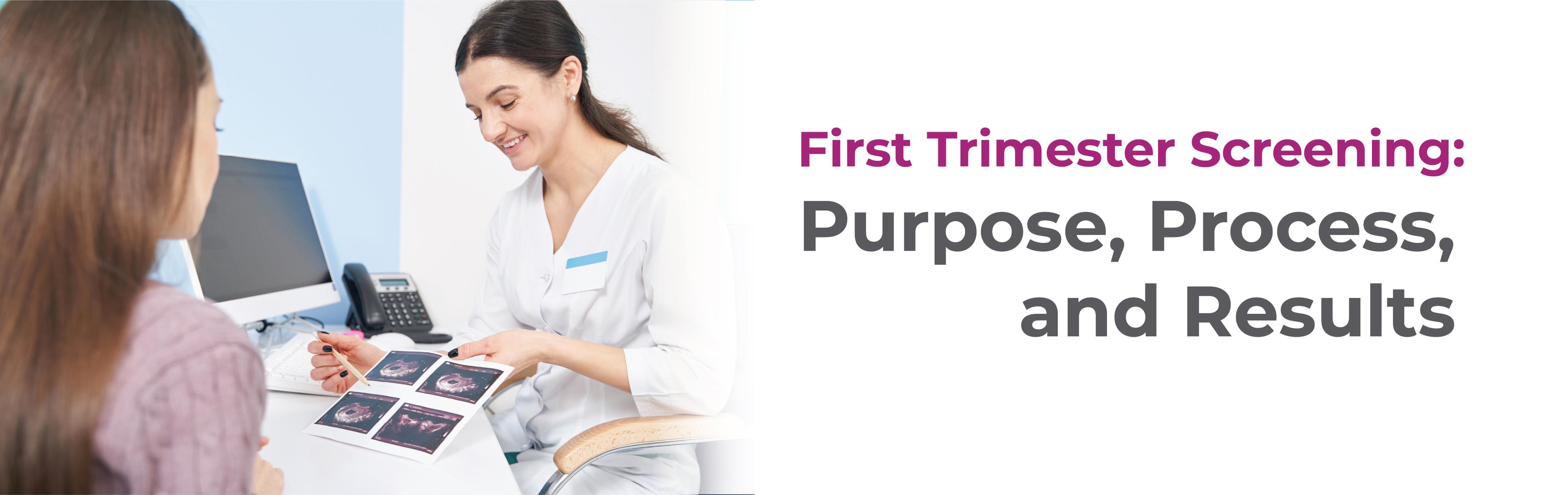
First Trimester Screening: Purpose, Process, and Results
Are you pregnant and in your first trimester? Congratulations on this! You've also reached the stage of pregnancy where you may hear about various scans and screening tests.
First trimester screening is one of them. It checks for your health as well as estimates the chance of certain chromosomal disorders in your developing baby.1 This provides your doctor with the information to guide you on the next steps.
But what does it screen for, how does it work, and what do the results mean? Let’s answer all these questions one by one.
Key Takeaways
- First trimester screening helps estimate the chance of certain chromosomal conditions in babies; it does not diagnose them.
- First Trimester combined screening usually includes a blood test and an NT ultrasound.
- Timing matters in the first trimester combined screening. It is performed within a specific stage of pregnancy.
- A higher-chance result does not confirm a condition. Your doctor can guide you on whether additional testing is needed.
What Is First Trimester Screening?
As the name suggests, first trimester screening is an early prenatal screening done during the first few months of pregnancy. It helps estimate the chance of certain chromosomal conditions in the developing baby, mainly Down syndrome (Trisomy 21), Edwards syndrome (Trisomy 18) and Patau syndrome (Trisomy 13).2 3
These conditions occur when the baby has an extra copy of chromosome 21, 18 or 13, respectively. This extra genetic material can affect how the baby develops.
That said, it is important to note that the first trimester includes only screening tests and not diagnostic tests. It tells you whether the pregnancy has a lower or higher chance of certain conditions. It does not confirm whether the baby has one. And based on the results, the doctor can advise whether any further testing is needed.
When Should You Get Screened?
The first trimester of pregnancy lasts until the end of the 13th week. First trimester screening is usually performed between the 11th and 14th weeks of pregnancy.
If your doctor has advised prenatal screening during this time, LifeCell Diagnostics offers First Trimester Quadruple (Delfia) as one of its prenatal screening options. Check with your doctor to know whether this test is suitable for you.
What Does First Trimester Screening Include?
First trimester screening is also known as combined first trimester screening because it involves both a blood test and an ultrasound scan.
1. Blood test- This test measures two pregnancy-related markers in the mother’s blood:
- PAPP-A (pregnancy-associated plasma protein-A): A protein mainly produced by the placenta during pregnancy.
- Free β-hCG (free beta-human chorionic gonadotropin): Part of the hCG hormone produced by the placenta during pregnancy.
2. Nuchal translucency (NT) scan- This is an ultrasound scan that measures the fluid-filled space at the back of the baby’s neck.
- The results of the blood test and NT scan are considered together to estimate the chance of certain chromosomal conditions in the baby.
How to Prepare for the Tests
First trimester screening usually does not require any special preparation. Simply follow your doctor’s or healthcare provider’s instructions before the test. For example, ask them if you need to have a full bladder for the ultrasound scan or not.
Also, apart from this, don’t forget to carry your previous pregnancy ultrasound reports and any other relevant medical records. These can help your doctor review your pregnancy history along with the screening results.
Understanding Your Screening Results
The reports simply show whether the baby is likely to have any chromosomal conditions being screened for. It does not give a simple yes or no answer.
A lower chance result means the baby is less likely to have the condition. A higher chance result does not confirm that your baby has a chromosomal condition. In fact, it only gives an estimated idea of the abnormality.
Based on your screening results or ultrasound findings, your doctor may advise additional testing such as.4
- NIPT (Non-Invasive Prenatal Testing)
- CVS (Chorionic Villus Sampling)
- Amniocentesis
NIPT is a blood test that checks cell-free DNA in the mother’s blood to screen for certain chromosomal conditions. 5
CVS and amniocentesis, on the other hand, are diagnostic tests. CVS tests a small sample of cells from the placenta, while amniocentesis tests a small amount of the fluid surrounding the baby. Both can help diagnose certain chromosomal or genetic conditions.
When to Consult a Doctor?
Speak to a doctor early in pregnancy about the prenatal screenings recommended for you, as some tests need to be completed within specific weeks.
You should also discuss your results with your doctor rather than interpreting a higher-risk result on your own. Your doctor can explain the results and further guide you on whether you need any additional tests or follow-up.
Conclusion
The first trimester of pregnancy can keep you busy with doctor visits, check-ups and scans. With so much happening, it can be easy to lose track of what needs to be done and when. But remember, these screenings are advised only to help you and your doctor keep a closer check on your baby’s development.So, try not to miss the recommended window for your first trimester screening. Keep track of your appointments, follow your doctor’s advice and, whenever you are unsure about a test or result, ask your doctor before making any decision.
FAQs
1. Is first trimester screening necessary?
First trimester screening is not mandatory. It is your choice whether you want to do it. However, the screening can help you understand whether your baby has a lower or higher chance of getting certain chromosomal conditions early. You can ask your doctor about the benefits and limitations of screening early in pregnancy to help you make an informed decision.
2. Is first trimester screening painful?
First trimester screening is generally not painful. You may feel a brief prick or slight discomfort when the blood sample is taken, while the NT ultrasound is generally painless.
3. What happens after a high-risk screening result?
A higher-risk screening result does not mean that your baby definitely has a chromosomal condition. It is best to discuss the report with your doctor to understand what the result means. Based on the findings, your doctor can advise whether you need any further testing, such as NIPT, CVS or amniocentesis.
References
+
Related Posts
Related Products
Are You Family Expecting A Baby?
I authorise LifeCell International Pvt.Ltd & its representatives to contact me with updates and notifications via Email/SMS/WhatsApp/Call. This will override DND/NDNC.
